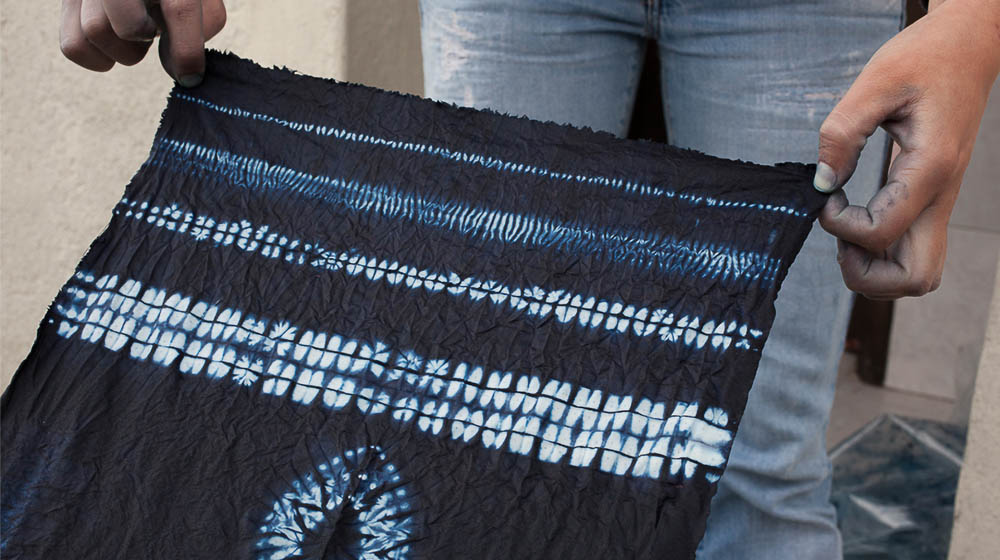
Indigo: How to achieve perfect dyes

from Gaia Gualtieri - 23/10/2013

#Indigo

Gaia Gualtieri

Indigo has always fascinated and “terrorized” many aspiring dyers.  So we decided to dedicate a special segment to this dyeing process, because indigo, aside from being one of the most beloved colors, needs to be used in a special, ad hoc process.

It is important to remember that indigo is a direct dye and therefore does not require the use of a mordant. However, that doesn’t mean that you can start directly from the dyebath using the extract as is. Indigo extract must first be prepared by creating what technically would be defined as a mother tincture.

Here’s how it’s done...
140 cm wide Silk Chiffon 6 - Raw Colors
Natural White
1 m € 20,29
2 m € 39,76
Piuma - 500 g - The Classics Collection
Natural White
1 pc. € 37,60
140 cm wide Silk Chiffon 3.5 - Raw Colors
Natural White
1 m € 18,90
2 m € 37,04
5 m € 89,77
Natural Indigo - 75 g
1 pc. € 30,08
€ 37,60

Mother-dye

  • Weigh the dry fibers (and/or the yarn and fabrics obtained by them).
  • Rinse them with a neutral soap.
  • Put your indigo in a 500 ml. can (preferably, iron) that can be closed with an airtight cap.
  • The amount of indigo dye needed for the preparation of the mother ranges from 2% (in order to obtain a light blue) to 5% (for a darker blue) according to the intensity of color that you wish to reach.
  • Fill 2/3 of the can with water and stir well to dissolve lumps if any.
  • Calculate the quantity of reducing agent based on the weight of the dye you are using for the reduction-oxidation process- caustic soda: 80% compared to the weight of dye; hydrosulphite: 80% compared to the weight of dye.
  • Add the caustic soda to the solution in the can and stir again. The reaction with the caustic soda will warm the solution.
  • Last, add the hydrosulphite and stir quickly.
  • Then close the can with your airtight cap and keep it in a bain-marie for 20/30 minutes and maintain a temperature of 55°C (131°F)


Dye bath with indigo (tub)

  • Pour the mixture obtained into a pot, filled with water beforehand (bath ratio 20/1) and raise the temperature to 131°F (55°C), not more.
  • Add 1 mg/L of hydrosulphite.
  • Put a lid on and let it sit for other 20 minutes.
  • The indigo bath is now ready and you can proceed to effective dyeing now.
  • Prepare a basin filled with warm water and two tablespoons of vinegar for rinsing the fiber after dyeing.
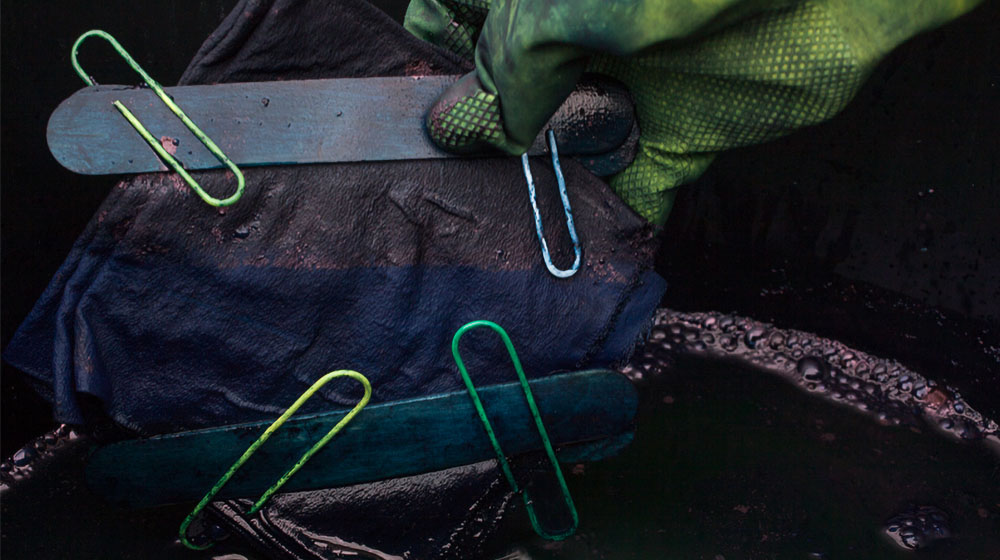
  • Soak your fiber (previously rinsed with neutral soap) in the dye bath and make sure it is completely submerged in the dye bath.
  • Do not shake the fiber excessively to avoid creating air bubbles. Let it  sit for 5 minutes.
  • Quickly remove the fiber from the dye bath and open it up in the air: the yellow-greenish colour will quickly turn  blue before your eyes.
  • At this point, rinse the fiber in the tub with warm water first to remove the colour residues and then in running cold water until the water comes out clean.
  • Leave the fiber to dry away from the direct sunlight.


    Tip from the dyer: the bath should have the colour of olive oil for the whole duration of the dying process, if a shift towards blue should occur add 1g/l of soda and 1g/l of  hyposulphite

    All images are courtesy of Coordinamento Tessitori - ©KEVO.biz

    If you liked this article maybe you would also enjoy Ecoprinting with Laura Dell'Erba - Fabrics of Animal Origin.

    WRITE A COMMENT