

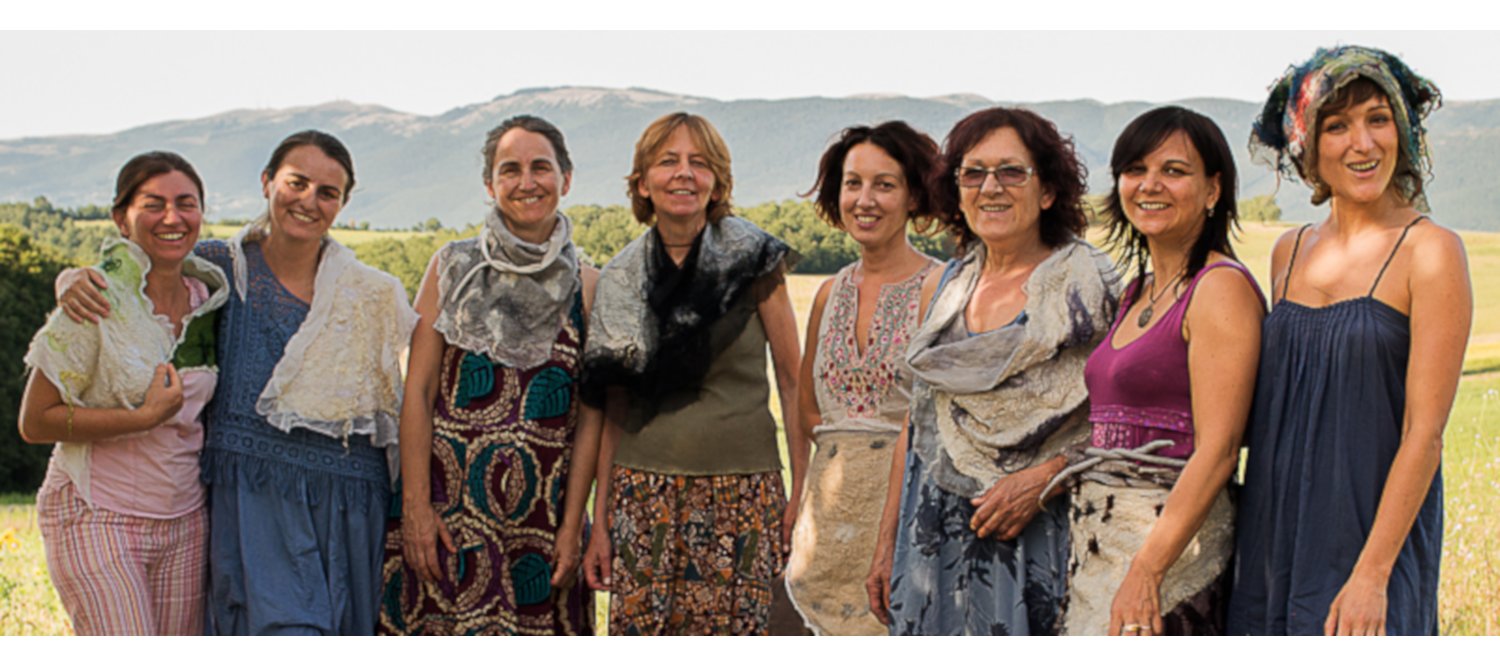
For some time now a few meetings for sharing felting techniques have been taking place in Casteltodino, in the province of Terni.
Silvia Argenti, along with Eva Basile, Konny Kuligk, Iliana Ricci, Diana Biscaioli and Maria Cristina Modanesi, gave life and form to the desire of prolonging the collective experience of Feltrosa in time. The system is non-formal education, without a guide but through the spontaneous sharing and observation of others' work. A subject is chosen together with a technique that will be developed during the workshop - a few guidelines for the participants to be interpreted freely and according to their sensibility.
Felting in group helps the people to learn in a more natural way, through observation and following their own pace. Informal education is an effective form of transmitting knowledge.
The experience ensures that everything occurs in a relaxed atmosphere, where felting recalls former times; when washerwomen used to work together, kneeling down at the “brellin” (the washtub) – their labour chats, laughs and disappointment for something gone wrong; question and exchanging of views in the midst of their universe - wool, water and soap.
The theme of last August 4 was the attempt to create a thin felt, using the technique of Nuno Felt, that is the felt formed by incorporating a fine fabric - which can often be a chiffon or gauze – by inserting tufts of wool, a technique developed in Gudrun Bartenberger’s workshop at Feltrosa 2013.
Gaia Girard e Lucia Pierri attended this meeting too.

Silvia Argenti and her mastiff Morena, the guests of FeltroSilvia.

Eva Basile shows her work, just finished.
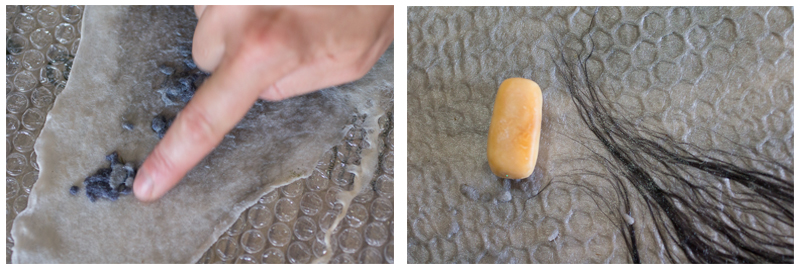
Eva used the nepps and bamboo tops.

Konny Kuligk is observing the result of her hard work
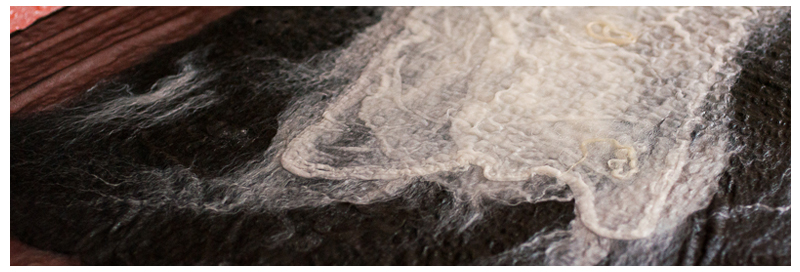
Konny used the silk hankies in her work
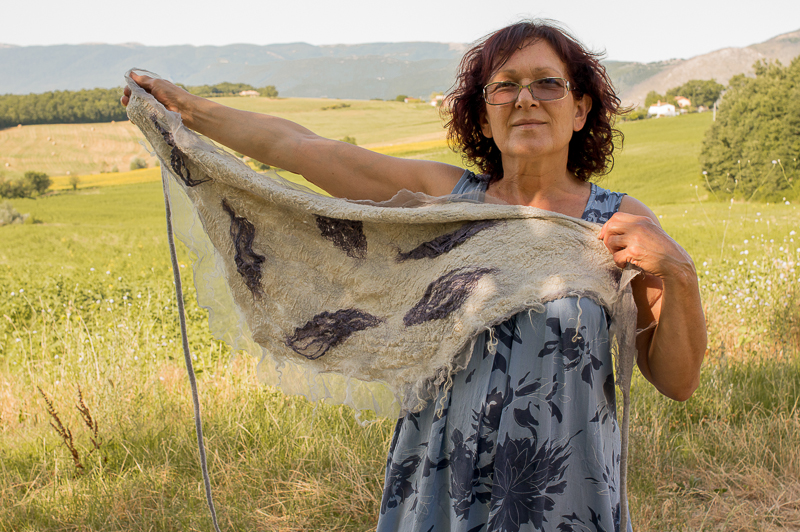
Iliana Ricci and her nunofelt neck

Lucy Pierri tried the nuno felt for the first time

Diana Biscaioli is evaluating her work in the light of the sun of the Umbrian countryside

Gaia Girard at the end of her intense day of work

Gaia has used extra-fine merino wool tops for her felt
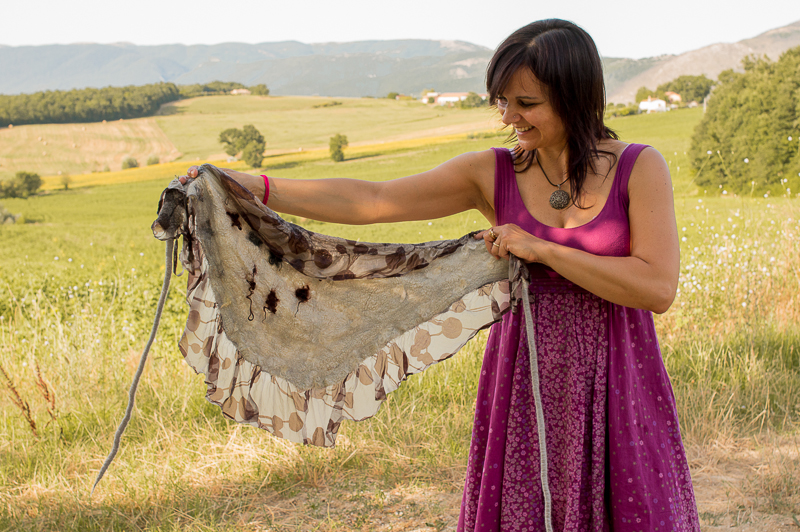
Maria Cristina Modanesi experienced a combination of wool fibers and a printed fabric.
There were different results, both technically and qualitatively, but the aim of the study was not to get a perfect and crystallized result, but also to have the opportunity to experience something unusual and out of the ordinary. Often, what you learn in the workshops must then be processed in order to ensure that it truly becomes part of your personal repertory. What appears to be a perfect technique according to the teacher may not be the best choice for the student. The meetings at Silvia and Iliana’s place, like all the other workshops around Italy, are a great chance for discussion and socialization and interesting learning opportunities for the participants.
The greeting at the end of the day and the promise to meet again soon, as well as an analysis of the time spent together, a few words on the complexity of the work, a comment on the invigorating hard work everybody made and the happiness of having worked in good company.
If you liked this article maybe you would also enjoy DHG exclusive interviews: Eva Basile.
WRITE A COMMENT